CÁC THÀNH TỰU CHÍNH
+ Function: Basic and applied research in magnetic materials, electromagnetic materials, superconductors, and related fields.
+ Mission:
- Carrying out fundamental research, technological development and deployment of the research results and achievements in the specified areas by functions, duties.
- Training and educating highly qualified human resources in the majors licensed by the Institute and in accordance with the functions of the Department/Laboratory.
- Collaboration activities with domestic and international partners and institutions according to the agreements signed by the Institute.
- Managing human resources, assets, and materials according to current regulations of the Goverment and the Institute.
- Perform other tasks assigned by the Director of the Institute.
+ Main research direction:
- Development of advanced magnetic materials: nano-structured magnetics, ferrofluids, soft magnetics, and multiferroics.
- Design of functional thin films and nanostructures: magneto-resistive wires, multilayer films, and soft magnets for high-power applications.
- Exploration of multifunctional materials: photocatalysts and nanostructured thermoelectrics for energy and environmental applications.
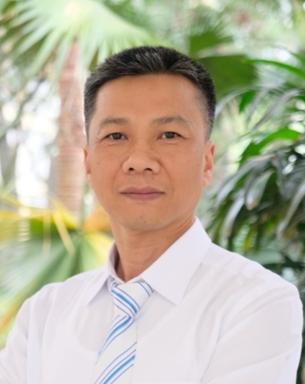 |
Head of Laboratory
- Assoc. Prof. Dr. Tran Dang Thanh, Senior Researcher
- Office address: Room 106, Building A2
- Phone: 0988707211
- Email: thanhtd@ims.(*) - replace (*) = vast.ac.vn
|
MEMBERS
|
No
|
Academic title/Degree/Full Name
|
Tenure/ Contract
|
Office address
|
Email
replace (*) = vast.ac.vn
|
|
1
|
Assoc. Prof. Dr. Tran Dang Thanh
|
Tenure
|
Room 106, Building A2
|
thanhtd@ims.(*)
|
|
2
|
Assoc. Prof. Dr. Do Hung Manh
|
Tenure
|
Room 107, Building A2
|
manhdh@ims.(*)
|
|
3
|
Dr. Ngo Thi Hong Le
|
Tenure
|
Room 107, Building A2
|
hongle@ims.(*)
|
|
4
|
Dr. Nguyen Thi Ngoc Anh
|
Tenure
|
Room 110, Building A2
|
anhntn@ims.(*)
|
|
5
|
Dr. Vu Hong Ky
|
Tenure
|
Room 110, Building A2
|
kyvh@ims.(*)
|
|
6
|
Dr. Pham Hoai Linh
|
Tenure
|
Room 109, Building A2
|
linhph@ims.(*)
|
|
7
|
Dr. Pham Van Thach
|
Tenure
|
Room 109, Building A2
|
thachpv@ims.(*)
|
|
8
|
MSc. Ta Ngoc Bach
|
Tenure
|
Room 110, Building A2
|
bachtn@ims.(*)
|
|
9
|
Dr. Dao Thi Hoa
|
Tenure
|
Room 110, Building A2
|
hoadt@ims.(*)
|
|
10
|
BSc. Nguyen Thi Viet Chinh
|
Contract
|
Room 106, Building A2
|
chinhntv@ims.(*)
|
KEY ACHIEVMENTS
1. Successfully established a strong research group on nanostructured magnetic materials. Developed an advanced research direction in transition-metal-based nanostructured magnetic materials, significantly increasing both the quantity and quality of high-impact international publications. Core members authored 17 SCIE papers (13 in Q1 journals, IF = 3.5–6.7, with 8 papers IF > 5) and contributed to many other SCIE articles during 2022–2024.
2. Successfully synthesized and studied the properties, photocatalytic activity, and magnetocaloric effects of ferrofluids and core–shell magnetic nanoparticles.
3. Successfully fabricated and investigated multilayer magnetoresistive films, demonstrating room-temperature magnetoresistance effects and potential applications in magnetic recording, spin valves, and spintronics.
4. Developed a novel magnetic nanoparticle system based on porous SiO₂ integrated with GdₓFe₃₋ₓO₄ for targeted drug delivery in cancer treatment.
5. Successfully synthesized and studied the properties of nanowires and single-component nanoparticles for applications in biosensors.
Figure 1. STEM-EDS chemical mapping of Fe3O4@CoFe2O4 core/shell NPs [H.M. Do et al., J. Sci.: Adv. Mater. Dev. 9 (2024) 100658].
Figure 2. The room temperature TMR curves of the nano-patterned MTJ devices with various junction sizes under an in-plane magnetic feld. Inset shows a scanning electron microscope (SEM) image of a MTJ pillar [T.N.A. Nguyen et al., Appl. Phys. A 131 (2025) 505].
SELECTED PUBLICATIONS
- Tran Dang Thanh, Do Hung Manh*, Le Thi Hong Phong, Ta Ngoc Bach, Pham Hong Nam, Nguyen Thi Ngoc Anh, Vu Hong Ky, Ngo Thi Hong Le, Tran Minh Thi, “Iron oxide nanoparticles synthesized by coprecipitation method: Impacts of zinc doping and surface functionalization by polyvinylpyrrolidone on the magnetic properties and heating effciency”,Ceramics International 51 (2025) 1448.
- T. N. A. Nguyen*, Q. N. Pham, K. T. Do, H. K. Vu, H. N. Pham, D. T. Tran, H. M. Do, “The study of the effect of device downsizing on 1/f noise in deep submicron magnetic tunnel junctions”, Applied Physics A 131 (2025) 505.
- Hung Manh Do*, Thi Hong Phong Le, Dang Thanh Tran, Thi Ngoc Anh Nguyen, Ivan Skorvanek, Jozef Kovac, Peter Svec Jr., Manh Huong Phan, “Magnetic interaction effects in Fe3O4@CoFe2O4 core/shell nanoparticles”, Journal of Science: Advanced Materials and Devices 9 (2024) 100658.
- Tran Dang Thanh, Tran Thi Ngoc Nha, Tran Thi Ha Giang, Pham Hong Nam, Dang Ngoc Toan, Dinh Thanh Khan, Do Hung Manh, and Pham Thanh Phong, “Structural, optical, magnetic properties and energy-band structure of MFe2O4 (M = Co, Fe, Mn) nanoferrites prepared by co-precipitation technique”, RSC Adv. 14 (2024) 23645.
- Julia Kasiuk, Wen-Bin Wu, Janusz Przewoznik, Czesław Kapusta, Ivan Svito, Thanh Huong Nguyen, Khanh Tung Do, Dang Thanh Tran, Hung Manh Do, Johan Åkerman, and Thi Ngoc Anh Nguyen*, “The enhancement of low-temperature excitation of magnons via interlayer exchange coupling in perpendicularly magnetized [Co/Pd] multilayers”, Appl. Phys. Lett. 124 (2024) 192407.
- L.T.H. Phong, Do Hung Manh*, Tran Dang Thanh, T.N. Bach, V.H. Ky, Ivan Skorvanek, Jozef Kovac, Peter Svec, The-Long Phan, Manh Huong Phan, “Contrasting shell thickness-dependent magnetic behaviors of CoFe2O4@Fe3O4 and Fe3O4@CoFe2O4 core/shell nanoparticles, J. Alloys Compd. 1005 (2024) 176138.
- Tran Dang Thanh*, Ngo Tran, Nguyen Thi Viet Chinh, Tran Thi Ha Giang, Do Hung Manh, Nguyen Quy Tuan, “Development of high-effciency tri-layer microwave absorbing materials based on SrMeFe11O19 hexaferrite”, Journal of Alloys and Compounds 970 (2024) 172421.
- D. H. Manh, T. D. Thanh, D.-H. Kim, The-Long Phan, “Increased magnetocaloric response of La2/3Ca1/3MnO3/Gd nanocomposites in a large temperature range”, Current Applied Physics 60 (2024) 70.
- N. T. H. Le*, N. X. Viet, N. V. Anh, T. N. Bach, P. T. Thu, N. T. Ngoc, D. H. Manh, V. H. Ky, V. D. Lam, V. Kodelov, S. Von Gratowski, N. H. Binh, T. X. Anh, “Non-enzymatic electrochemical sensor based on ZnO nanoparticles/porous graphene for the detection of hypoxanthine in pork meat”, AIP Adv. 14 (2024) 025034.
- Pham Van Thach*, et al, Current-induced domain wall motion driven by spin–orbit torque and Dzyaloshinskii–Moriya interaction in Pt/GdFeCo and Rh/GdFeCo wires, AIP Adv. 14 (2024) 085232.
FACILITIES
|
TT
|
Equipment
|
Capabilities
|
Location
|
Staff
|
|
1
|
Physical properties measurement system – VersaLab
(Quantum design, USA)
|
Characterization of magnetic and electrical properties; T = 50-400 K; Hmax = ± 30 kOe.
|
Room 206, Building A2
|
Assoc. Prof. Dr. Tran Dang Thanh
Assoc. Prof. Dr. Do Hung Manh
Dr. Vu Hong Ky
|
|
2
|
Vibrating Sample Magnetometer (VSM)
(Homemade)
|
Characterization of field and temperature dependences of magnetization: T = 77-1000 K; Hmax = ± 12 kOe.
|
Room 207, Building A2
|
Dr. Vu Hong Ky
MSc. Ta Ngoc Bach
|
|
3
|
Field emission scanning electron microscopy (FESEM)
(Hitachi, Japan)
|
+ Resolution: 1.0 nm (15 kV, WD = 4 nm); 1.4 nm (1 kV, WD = 1.5 nm); 2.0 nm (1 kV, WD = 1.5nm).
+ Magnification: X20-2000 and/or X100-800000.
+ STEM and EMAX ENERGY (EDX).
|
Room 202, Building A2
|
Assoc. Prof. Dr. Do Hung Manh
MSc. Ta Ngoc Bach
|
|
4
|
Low frequency noise measurement system under 100 MHz
(Homemade)
|
f < 100 MHz
|
Room 304, Building A2
|
Dr. Nguyen Thi Ngoc Anh
|
|
5
|
High energy ball mill: SPEX 8000D
(Spex, USA)
|
Dry and/or wet milling.
|
Room 116, Building A2
|
Assoc. Prof. Dr. Do Hung Manh
MSc. Ta Ngoc Bach
|
|
6
|
Some equipment and tools for synthesizing materials by chemical methods (co-precipitation, hydrothermal) and heat treatment
|
furnace (1100 oC), vacuum drying oven (300 oC)...
|
Room 116, Building A2
|
Dr. Vu Hong Ky
MSc. Ta Ngoc Bach
|