CÁC THÀNH TỰU CHÍNH
Laboratory of Technologies for Hydrogen and Electrochemistry
|
+ Functions:
Conduct fundamental and applied research in hydrogen technology, electrochemical corrosion protection for infrastructure in various environments, and other related fields.
+ Responsibilities:
- Conduct scientific research, develop technologies, and implement research outcomes in areas aligned with the department’s functions.
- Train high-level human resources in specialized fields authorized by the Institute and consistent with the department’s scope.
- Collaborate domestically and internationally under agreements signed by the Institute.
- Manage personnel, assets, and materials in accordance with current regulations of the State and the Institute.
- Perform other tasks assigned by the Director of the Institute.
+ Main Research Directions:
- Develop technologies for manufacturing proton exchange membrane fuel cells (PEMFC).
- Develop technologies for water electrolysis equipment to produce green hydrogen using solid electrolyte membranes.
- Research and develop advanced catalytic materials with high efficiency for electrochemical reactions in fuel cells, water electrolysis, and energy storage devices.
- Research and develop electrode materials and advanced technologies for applications in electrochemical engineering.
|
|
|
Head of Laboratory Contact Information:
- Academic title and full name: Dr. Senior Researcher Do Chi Linh
- Office address: Room 608, Building B2
- Mobile phone: +84 838 736 121
- Email: linhdc@ims.(*) - Note: Replace (*) = vast.ac.vn
|
List of Laboratory Members
|
No.
|
Full Name
|
Position
|
Employment Type
|
Office Address
|
Email
Note: Replace (*) = vast.ac.vn
|
|
1
|
Do Chi Linh
|
Head of Laboratory
|
Permanent Staff
|
Room 608, Building B2
|
linhdc@ims.(*)
|
|
2
|
Pham Thy San
|
PhD, Senior Researcher
|
Permanent Staff
|
Room 604, Building B2
|
sanpt@ims.(*)
|
|
3
|
Ngo Thi Anh Tuyet
|
PhD, Senior Researcher
|
Permanent Staff
|
Room 608, Building B2
|
tuyetnta@ims.(*)
|
|
4
|
Pham Hong Hanh
|
PhD, Senior Researcher
|
Permanent Staff
|
Room 608, Building B2
|
hanhph@ims.(*)
|
|
5
|
Bui Thi Hoa
|
PhD, Senior Researcher
|
Permanent Staff
|
Room 605, Building B2
|
hoabt@ims.(*)
|
|
6
|
Le Tuan Minh
|
Engineer
|
Permanent Staff
|
Room 604, Building B2
|
minhlt@ims.(*)
|
|
7
|
Nguyen Duc Lam
|
MSc
|
Permanent Staff
|
Room 605, Building B2
|
lamnd@ims.(*)
|
Key Achievements
Research and Development of Proton Exchange Membrane Fuel Cells (PEMFC)
As fossil fuel resources such as petroleum, coal, and natural gas continue to deplete globally, the search for environmentally friendly alternative energy sources has become increasingly urgent. Among various renewable energy options—such as solar, wind, nuclear, and geothermal—proton exchange membrane fuel cells (PEMFC) have emerged as a promising solution.
PEMFCs are devices that convert chemical energy into electrical energy using hydrogen and oxygen from ambient air. They are widely studied due to their numerous advantages: silent operation, high energy conversion efficiency (up to 60%), high energy and power density, fast startup time, low operating temperature (<80°C), and clean energy input that produces no harmful emissions. PEMFCs are considered a viable replacement power source for a wide range of applications, from portable electronics to residential power stations and transportation systems. Moreover, PEMFCs are currently viewed as one of the few technologies capable of long-term energy storage.
In our research efforts, we have focused on developing technologies for catalyst synthesis, membrane electrode assembly (MEA) fabrication, bipolar plate design, and fuel cell stack integration. Notable achievements include:
- Synthesized Pt/C catalysts and Pt₃M/C alloy catalysts (where M = Co, Ni, Fe) with high activity for the oxygen reduction reaction (ORR) in PEMFCs using chemical precipitation methods. The resulting catalysts achieved metal loadings of up to 60 wt% and demonstrated excellent electrochemical performance and durability.
- Developed high-performance MEA fabrication technology for PEMFCs with active areas ranging from 100 to 300 cm².
- Designed and assembled a fuel cell stack consisting of 40 single cells, achieving a peak output power of approximately 1 kW.
Research on Water Electrolysis Technology for Green Hydrogen Production
In the field of water electrolysis for hydrogen generation, the laboratory has focused on developing core technologies, including: the synthesis of highly active and durable catalyst materials for hydrogen evolution reaction (HER) and oxygen evolution reaction (OER); the fabrication of high-performance and long-lasting membrane electrode assemblies (MEA); the design of efficient water electrolysis systems with hydrogen production capacities up to 250 L/h; and the integration of green hydrogen production using solar energy.
In the development of advanced catalyst systems for HER and OER, the laboratory has achieved several notable results:
- Synthesized noble metal-based catalyst powders including RuO₂, IrO₂, and IrₓRu₁₋ₓO₂ via hydrolysis methods, with particle sizes ranging from 20–40 nm, specific surface areas up to 56 cm²/g, and excellent durability and activation performance for use in PEM water electrolyzers (PEMWE).
- Developed hybrid materials such as MoS₂–graphene and MoSe₂–graphene as catalysts for hydrogen evolution in both acidic and alkaline environments.
- Fabricated transition metal chalcogenide catalysts including VS₂ with nanoflower structures and SnS with nanosheet morphology, applicable for both HER and OER in alkaline media.
- Produced oxide-based catalysts using transition metals (Co, Mn) in both film and powder forms for oxygen evolution reactions in alkaline conditions.
In the development of PEMWE systems, the laboratory has also achieved key milestones:
- Established a fabrication process for MEAs with active areas ranging from 50 to 100 cm².
- Designed and assembled a water electrolyzer stack consisting of 12 single cells (each with 50 cm² active area), achieving a hydrogen production rate of 250 L/h.
- Successfully tested an integrated green hydrogen production system powered by solar energy and utilizing PEMWE technology.
Research on Corrosion Protection for Marine Structures Using Sacrificial Anodes and Impressed Current Systems
The laboratory has developed cathodic protection technologies to prevent corrosion of metal structures in marine environments, including ships, fuel pipelines and tanks, port foundations, and offshore oil platforms. These systems utilize both sacrificial anodes and impressed current methods.=To date, the laboratory has successfully commercialized several sacrificial anode materials that meet both Vietnamese and international quality standards. Annual production contracts for these anodes generate revenues of approximately 3–5 billion VND, serving nearly 100 regular corporate clients. In addition, the laboratory has applied impressed current cathodic protection systems using MMO (Mixed Metal Oxide) inert anodes with lifespans of up to 20 years. One such system was designed, installed, and operated for the Minh Phú 99 cargo ship (6,000-ton capacity). The system includes four MMO anodes, two Zn reference electrodes, and a fully automated DC power source. The automated system features a 25A–25V DC power supply, control modules for maintaining protective potential, display units for electrical parameters, and a data logging module with computer connectivity. After installation, the measured hull potential averaged –970 mV (Ag/AgCl), meeting the TCVN 6051:1995 standard for cathodic protection systems.

Figure 1. Some images showing the research results on proton exchange membrane fuel cells (PEMFCs)
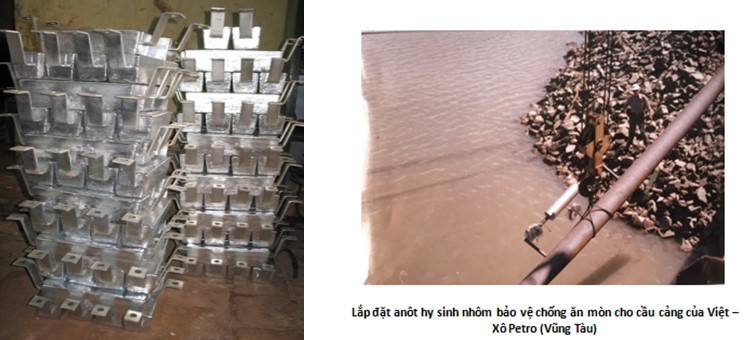

Figure 2. Cathodic protection system for the pipeline and storage tank systems of the Petroleum Company in Vũng Tàu.
Publications:
1. Efficient Synthesis and Enhanced Electrochemical Performance of MnCoO Catalysts for Oxygen Evolution Reaction. Hoa Thi Bui *· Pham Hong Hanh · Nguyen Duc Lam · Do Chi Linh· Ngo Thi Anh Tuyet · Nguyen Hoang Tung ·Vu Thi Kim Oanh· Tuan Anh Pham · Jae‑Yup Kim · Pham Thy San, J. Electron. Mater. 53, 53–64 (2024) (IF=2,2)
2. “Investigating the Influence of Vinylene Carbonate Concentrations on Battery Stability: Role of Electrode/Electrolyte Interfaces”.Hyungil Jang*, Hoa Thi Bui *, Joonghee Han , MyungMo Sung , Vishnu V. Kutwade, Ketan P. Gattu , Mahesh Sharma , Sung-Hwan Han *, and Ramphal Sharma* J Solid State Electrochem 27, 3513–3523 (IF=2,6)
3. MoSSe-graphene based sandwiched nanolayer hybrid as high-performance lithium sulfur-selenium (LiSSe) battery cathodes. Hoa Thi Bui, Nguyen Thanh Tung, Do Chi Linh, Nguyen Hoang Tung, Jae-Yup Kim, HyungIl Chang, SungHwan Han, Supriya A.Patil , Hyunsik Im, NabeenK. Shrestha.Inorganic Chemistry Communications, 167, 2024, 112759. (IF=4,4).
4. Unlocking the catalytic potential of nickel sulfide for sugar electrolysis: green hydrogen generation from kitchen feedstock”Supriya A. Patil, Atul C. Khot, Kalyani D. Kadam, Hoa Thi Bui, Hyunsik Im and Nabeen K. Shrestha Inorg. Chem. Front., 2023,10, 7204-7211.(IF=6,1)
5. Electrolyte and interfacial engineering for self-formation of In₂S₃/In₂O₃ heterojunction with an enhanced photoelectrochemical activity. Supriya A. Patil, Hoa Thi Bui, Akbar I. Inamdar, Hyunsik Im, Nabeen K. Shrestha Ceramics International, Volume 50, Issue 21, Part B, 1 November 2024, Pages 42169-42175 (IF = 5,1)
6. Hoa Thi Bui*, Nguyen Duc Lam, Do Chi Linh, Nguyen Thi Mai, HyungIl Chang, Sung-Hwan Han, Vu Thi Kim Oanh, Anh Tuan Pham, Supriya A Patil, Nguyen Thanh Tung, Nabeen K Shrestha, “Escalating Catalytic Activity for Hydrogen Evolution Reaction on MoSe2@Graphene Functionalization” Nanomaterials 2023, 13(14), 2139. (IF=5.3, Q1).
7. Hong Hanh Pham, Do Chi Linh, Tuyet Thi Anh Ngo, Vu Thi Kim Oanh, Bui Xuan Khuyen, Supriya A. Patil, Nhu Hoa Thi Tran, Sungkyun Park, Hyunsik Im, Hoa Thi Bui*, Nabeen K. Shrestha “1-D array of porous Mn0.21Co2.79O4 nanoneedles with an enhanced electrocatalytic activity toward oxygen evolution reaction “ Dalton Trans., 2023,52, 12185-12193. (IF=4.0, Q1)
8. Thi Quynh Hoa Kieu , Thi Yen Nguyen and Chi Linh Do” Effect of Different Catholytes on the Removal of Sulfate/Sulfide and Electricity Generation in Sulfide-Oxidizing Fuel Cell.”Molecules 2023, 28(17), 6309; (IF=4.6, Q1).
9. Thi Quynh Hoa Kieu , Thi Yen Nguyen and Chi Linh Do” Treatment of Organic and Sulfate/Sulfide Contaminated Wastewater and Bioelectricity Generation by Sulfate-Reducing Bioreactor Coupling with Sulfide-Oxidizing Fuel Cell” Molecules 2023, 28(17), 6197. (IF=4.6, Q1).
10. Hoa Thi Bui*, Hyungil Jang, Joonghee Han, Tjahjono Juan Markus, MyungMo Sung, Vishnu V Kutwade, Supriya A Patil, Nabeen K Shrestha, Ramphal Sharma, Sung-Hwan Han “Engineering of Li2SxSey cathode by reduction of multilayered graphene-embedded 2D MoSSe structure for high-performance lithium sulfur selenium hybrid battery”Journal of Energy Storage, Volume 72, Part A, 15 November 2023, 108295 (IF=9.3, Q1).
Main Laboratory Equipment
|
No.
|
Equipment Name
|
Functions & Capabilities
|
Installation Location
|
Responsible Operator
|
|
1
|
500W Electrolyzer Evaluation System
Origin: South Korea
|
Used for evaluating MEA electrode properties, catalyst performance, and operating conditions of PEMWE systems including water flow rate, temperature, and pressure.
|
Room 607, Building B2, 18 Hoang Quoc Viet, Nghia Do, Hanoi
|
Dr. Do Chi Linh
|
|
2
|
5kW Fuel Cell Testing Station
Origin: Germany
|
Used for assessing the performance of PEMFC stacks up to 5kW, including fuel gas flow rate, temperature, and pressure.
|
172 Tuu Liet, Hoang Liet, Hanoi
|
Dr. Phạm Thy San
|
|
3
|
100W Fuel Cell Testing Station
Origin: Germany
|
Used for evaluating MEA electrode properties, catalyst performance, and operating conditions of PEMFC systems including water flow rate, temperature, and pressure.
|
172 Tuu Liet, Hoang Liet, Hanoi
|
Dr. Phạm Thy San
|
|
4
|
Ultrasonic Spray Coating Device
Origin: Germany
|
Used for fabricating thin catalyst layers using ultrasonic spray nozzles.
|
Room 607, Building B2, 18 Hoang Quoc Viet, Nghia Do, Hanoi
|
Dr. Đỗ Chí Linh
|